Lesson of the Week: What’s the Optimal Data Rate for Mezzanine Files?

When you upload a file to an online video platform (OVP) or user-generated content (UGC) site, the mezzanine file you create will be transcoded into multiple ABR rungs. Given that video is a garbage-in/worse-garbage-out medium, the inclination is to encode at as high a data rate as possible. However, higher data rates increase upload time and the risk of upload failure.

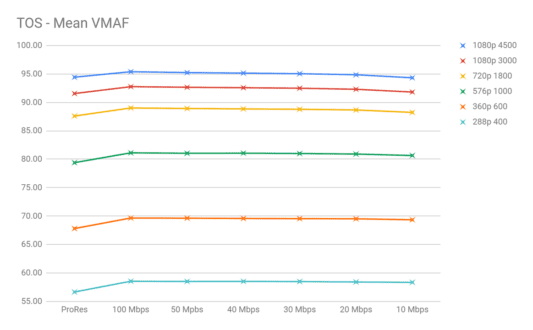
It turns out that encoding a 1080p30 file above 10 Mbps delivers very little additional quality and that ProRes output may actually reduce quality as compared to a 100 Mbps H.264-encoded file. To identify the optimal data rate for mezzanine files, I tested two files, Sintel and Tears of Steel, to two full encoding ladders.

This 13-minute lesson, which will replace the existing lesson in Streaming Media 101: Technical Onboarding for Streaming Media Professionals, reviews the workflows and encoding strings used, as well as reviewing mezzanine file requirements for YouTube, Brightcove, and Vimeo. You can access the video below.

Here’s the lesson.

About Jan Ozer

Avatar photo
I help streaming and video technology companies solve complex technical and market-facing problems in practical business terms. Engagements range from fixed-scope audits and codec strategy reviews to product testing and technical content that helps customers, prospects, and internal teams connect technical performance to business outcomes. I am a contributing editor to Streaming Media Magazine, writing about codecs and encoding tools. I have written multiple authoritative books on video encoding, including Video Encoding by the Numbers: Eliminate the Guesswork from your Streaming Video (https://amzn.to/3kV6R1j) and Learn to Produce Video with FFmpeg: In Thirty Minutes or Less (https://amzn.to/3ZJih7e). I have multiple courses relating to streaming media production, all available at https://bit.ly/slc_courses.

Check Also

Netflix’s Masterclass: Engineering Live Streaming at Scale

As a technologist and part-time couch potato, I appreciate Netflix on many levels. During the …

Inside AV2: Architecture, Performance, and Adoption Outlook

Three recent Alliance for Open Media presentations on YouTube shed new light on AV2’s performance …

The Future of Multiview: Client, Server, and Build Your Own (BYOMV)

Multiview, or the ability to view multiple live feeds simultaneously, is quickly becoming a must-have …

Leave a Reply

Your email address will not be published. Required fields are marked *