 Streaming Learning Center Where Streaming Professionals Learn to Excel

Related Articles


Contents
Executive Summary
Most codec discussions orbit a familiar set of markets—consumer streaming, broadcast contribution, video conferencing—where the economics are well understood and the roadmaps relatively stable. But a growing share of the world’s video bits flow under constraints those markets don’t share: feeds that no human ever watches, downlinks measured in kilobits per second, latency budgets shorter than a frame, and certification cycles measured in years. The codec choices that make sense for Netflix don’t necessarily make sense for an autonomous vehicle, a LEO satellite, or a tactical drone link.
This article surveys eight of those markets: video coded for machines rather than people, spatial and volumetric media, enterprise XR, remote healthcare and telesurgery, cloud gaming, defense ISR, LEO Earth observation, and AI-based neural video compression. Each has a different dominant codec today, a different near-term standardization story, and a different answer to where AI fits—whether as a consumer of video, an optimization target inside the codec, or both. Taken together, they sketch the corners of the codec landscape where the next wave of disruption is most likely to come from.
1. Video for Machines (VCM / FCM)
Overview
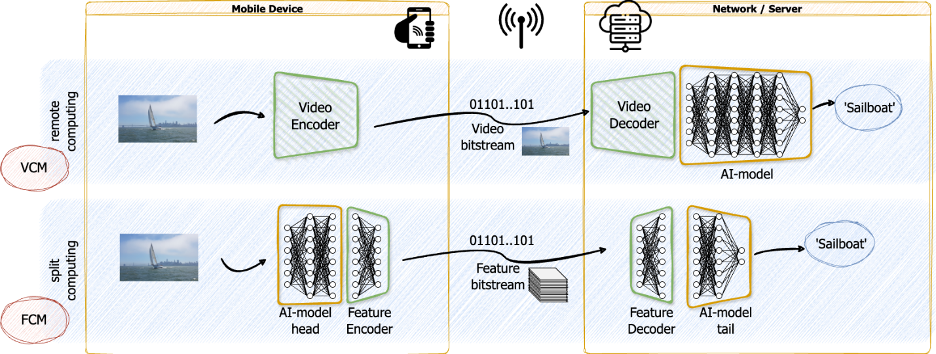
This is arguably the most structurally disruptive development in codec technology in the MPEG age. The fundamental premise shifts: instead of compressing video so a human viewer can reconstruct a perceptually faithful image, machine-oriented codecs discard everything irrelevant to the downstream AI task (object detection, tracking, classification) and transmit only task‑relevant features.
MPEG has two parallel standardization efforts under the MPEG‑AI umbrella (ISO/IEC 23888):
- VCM (Video Coding for Machines): A traditional pixel‑domain codec, but optimized for machine analysis rather than human perception. The output remains a playable video stream, but coding decisions are guided by machine‑vision metrics such as mAP and MOTA instead of PSNR or VMAF (MPEG VCM overview).
- FCM (Feature Coding for Machines): Compresses intermediate neural‑network features rather than pixel data, enabling collaborative intelligence (split inference between camera and cloud). Recent work on the Feature Coding Test Model shows average bitrate reductions on the order of 85% compared to pixel‑domain baselines while preserving task accuracy across multiple vision workloads.
At the 153rd MPEG meeting in early 2026, MPEG reported that Video Coding for Machines (ISO/IEC 23888‑2) had progressed to Draft International Standard (DIS) status, with Feature Coding for Machines following on a similar timeline toward DIS and Final Draft International Standard stages (ISO/IEC 23888‑2 project). In practice, this means that “video for machines” is transitioning from exploration to a stable, referenceable standard.
Complementary research from Florida Atlantic University investigates new VVC profiles targeting Feature Coding for Machines, showing that lightweight VVC configurations can significantly accelerate feature compression while maintaining near‑baseline machine‑task accuracy. FAU has also demonstrated a standards-aligned real‑time FCM implementation, described in their FCM‑RT paper and in a detailed article on real‑time feature coding for machines.
Here’s a YouTube video by the author that describes Feature Coding for Machines as impliemented by FAU.
Sub‑markets
Autonomous Vehicles: Autonomous‑vehicle development generates petabyte‑scale video datasets. In 2026, Beamr and dSPACE announced that a joint workflow for autonomous‑vehicle video achieved a 31% reduction in file size compared to a high‑quality baseline encode, and about 97% reduction versus uncompressed video, while maintaining mean Average Precision (mAP) within a narrow tolerance band (secondary report). For in‑vehicle teleoperation (remote driving), DriveU.auto reports that adding AV1 support on NVIDIA Jetson Orin delivers about 30% higher compression efficiency than HEVC at equal quality, which is critical for low‑latency operation over constrained cellular links.
For in‑sensor and ADAS pipelines, JPEG XS (ISO/IEC 21122) is gaining traction as a visually lossless, ultra‑low‑latency option. The JPEG committee and subsequent technical papers report that JPEG XS is designed for end‑to‑end latencies well below a frame (often a few lines), with implementations achieving sub‑millisecond codec latency in automotive and professional video applications (intoPIX JPEG XS overview, coding techniques paper), making it suitable for camera‑to‑processor links where frame‑level delays are unacceptable.
Smart Cities / Intelligent Transportation: In smart‑city deployments, large numbers of surveillance cameras feed analytics systems for traffic management, safety, and law enforcement, often with minimal human viewing. MPEG’s VCM documents explicitly highlight city‑wide camera networks and video analytics as primary target applications. While traditional video encoders remain a multi‑billion‑dollar market segment dominated by H.264 and HEVC, recent video encoder market reports note that surveillance and security are among the largest application categories and are expected to continue growing alongside AI‑driven analytics demand.
Drones / UAVs: Drone swarms and persistent ISR (intelligence, surveillance, reconnaissance) platforms face severe bandwidth and power constraints on RF links. FCM is directly applicable here: both machine‑to‑machine coding surveys and feature‑coding research describe UAVs and drones as primary use cases for split inference, where only compressed features are transmitted from the drone to a ground‑based model. The defense tactical video data link market, which includes drone video feeds, is estimated at USD 4.81 billion in 2025 and projected to reach USD 7.23 billion by 2030 at a CAGR of 8.49%, providing a natural budget line for FCM/VCM‑style technologies once they mature.
Industrial Machine Vision / IIoT: Factory automation, quality inspection, and robotic systems increasingly run vision inference at the edge. The industrial edge market, which includes edge servers, gateways, and compute platforms for these workloads, was valued in the low‑twenties billions in the mid‑2020s and is projected to roughly double by 2030, with CAGRs in the low‑ to mid‑teens depending on the definition. These systems need codecs that minimize latency and power consumption on constrained hardware, a role well‑suited to JPEG XS today and, over time, to VCM‑style machine‑centric coding as standards and silicon support become widely available.
2. Spatial / Immersive / Volumetric Video
Overview
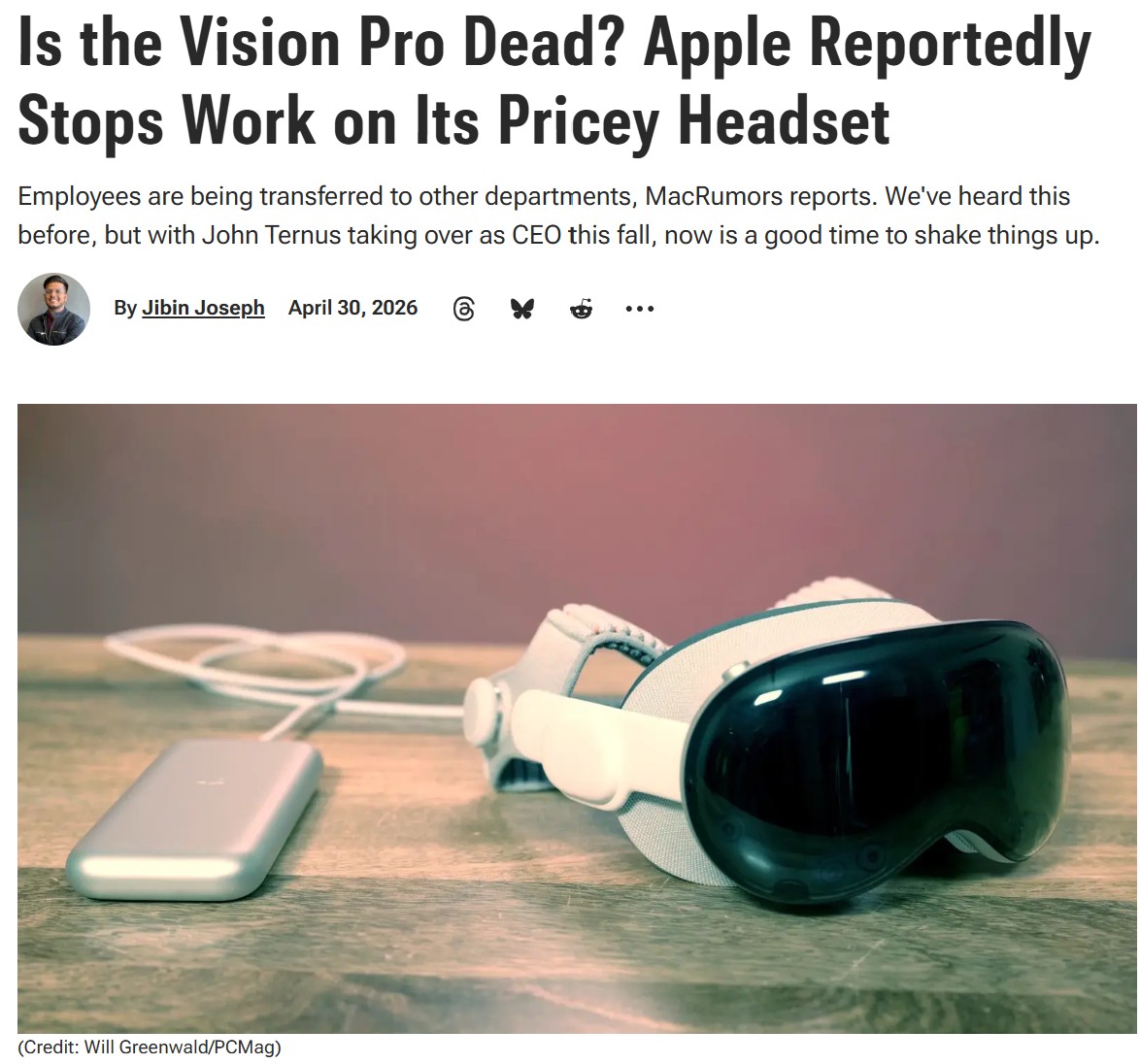
The first wave of consumer spatial computing headsets (Apple Vision Pro, Meta Quest 3) demonstrated what spatial codecs can do, but the device market has already hit a correction. Reports indicate that Apple has effectively stopped work on future Vision Pro hardware after weak sales and high return rates, even as it continues to support the existing device in software, and Meta’s Reality Labs division has accumulated tens of billions of dollars in losses while Quest shipments declined in 2025.
Despite this retrenchment, the underlying spatial media pipeline continues to evolve. Apple now records
spatial video in MV‑HEVC on iPhone 15 Pro and plays it back on Apple Vision Pro, and Meta has added native support for this format on Quest headsets so it can play Apple’s spatial video without transcoding. On the enterprise side, XR for training, design, and remote assistance is still a growth area, with market studies for XR and industrial metaverse consistently projecting high‑double‑digit CAGRs into the early 2030s despite differing scopes.
Codec Landscape
MV‑HEVC (Multiview HEVC): Apple’s spatial video format, which is used natively in iPhone 15 Pro capture and Apple Vision Pro playback, is based on an MV‑HEVC representation. Apple’s documentation describes spatial video as “recorded in the MV‑HEVC format,” storing stereoscopic views in separate HEVC layers, and coverage of Meta’s roadmap confirms that Quest now natively supports Apple’s MV‑HEVC spatial video rather than requiring transcoding.
V‑PCC / G‑PCC (MPEG‑I Point Cloud Compression): MPEG’s point cloud compression standards address volumetric and point cloud media. Unified overviews of V‑PCC and G‑PCC highlight that V‑PCC (Video‑based Point Cloud Compression) projects dense point clouds into atlases and compresses them with a conventional video codec, while G‑PCC (Geometry‑based Point Cloud Compression) targets sparse point clouds such as LiDAR scans. V‑PCC is explicitly video‑codec agnostic, so it can reuse existing HEVC decoders today and migrate to AV1 or VVC in the future, and is positioned for volumetric capture of real‑world scenes for VR/AR, telepresence, and digital twins.
Radiance Fields (NeRF / 3D Gaussian Splatting): JPEG and MPEG have recognized that radiance field representations (including Neural Radiance Fields and 3D Gaussian Splatting) are emerging as a distinct class of visual media that requires dedicated compression and interoperability standards. A joint JPEG/MPEG workshop on radiance fields and related announcements notes that both committees see a need for standardized coding of radiance fields to enable interoperable applications and services. Independent coverage reiterates that these techniques have advanced rapidly but face challenges around data size and interoperability, creating a clear standardization opportunity.
AI‑based point cloud coding is also within the scope of MPEG‑AI, which explicitly includes machine‑centric coding tools for non‑traditional visual data such as point clouds and volumetric captures alongside VCM and FCM.
3. Enterprise XR / Industrial Metaverse
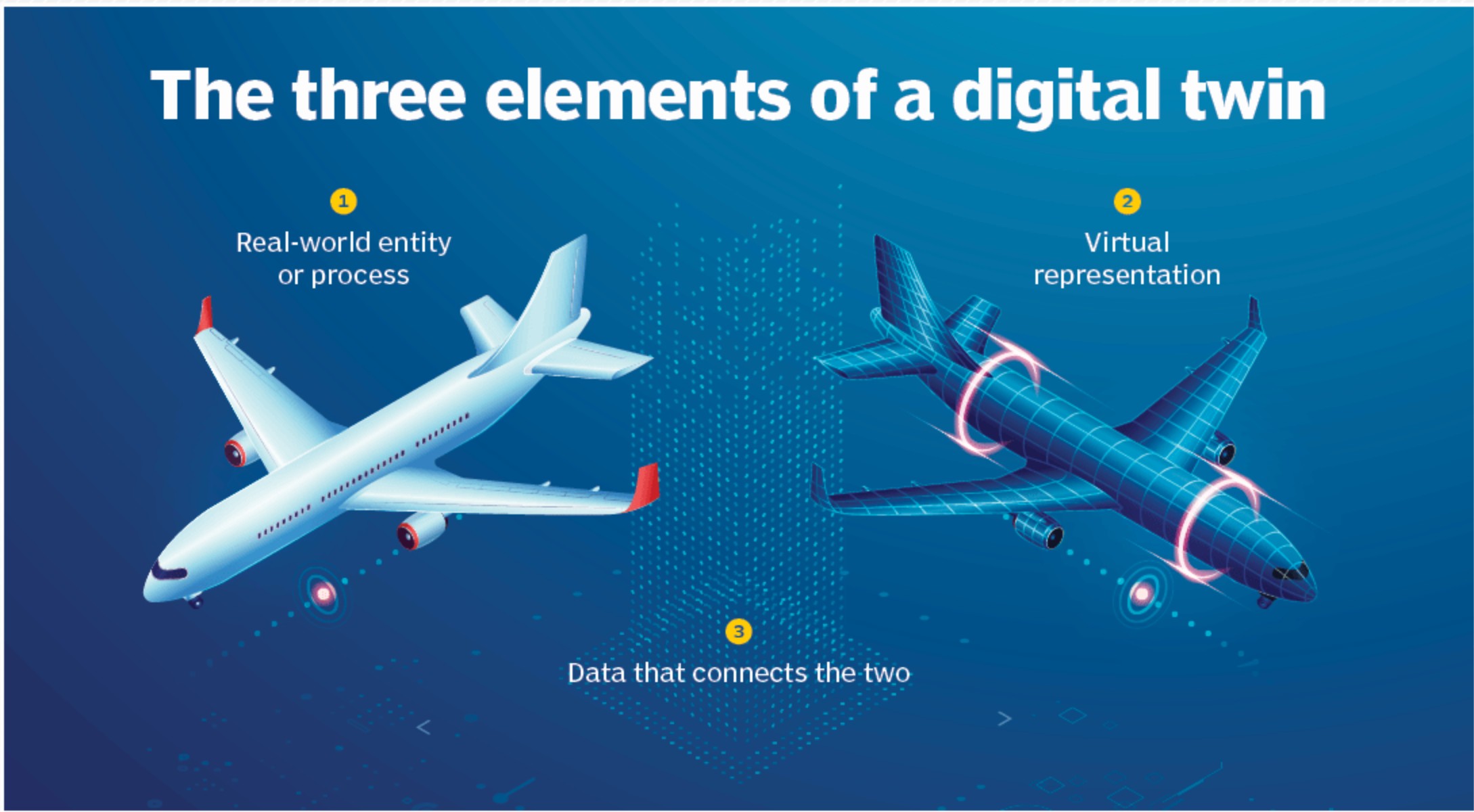
The industrial metaverse, including digital twins, collaborative XR for manufacturing, and large‑scale industrial simulation, remains a significant adjacent market even as consumer XR cools. A ResearchAndMarkets summary reports that the global industrial metaverse market was valued at USD 34.44 billion in 2024 and is expected to reach USD 181.04 billion by 2030, implying a CAGR of roughly 32% from 2025 to 2030. A separate analysis from Precedence Research puts the market at USD 24.51 billion in 2024 and projects growth to USD 395.15 billion by 2034 at a CAGR just over 32%, underscoring both the aggressive growth expectations and the variability in definitions.
Platforms such as NVIDIA Omniverse provide much of the enabling infrastructure for digital twins and real‑time 3D collaboration, allowing engineers to aggregate 3D data, simulate complex systems, and iterate on designs in a shared virtual space. As these platforms mature, they effectively set expectations for volumetric video and 3D streaming requirements in industrial environments, creating a pull‑through effect for codecs that can handle dense point clouds, radiance fields, and mixed 2D/3D media.
In terms of codecs, today’s industrial metaverse stacks are likely to combine conventional streaming formats such as H.264, HEVC, and AV1 for 2D viewports and dashboards with specialized volumetric standards like V‑PCC and G‑PCC for point‑cloud and LiDAR‑style data. In addition, proprietary volumetric codecs like Arcturus’s Accelerated Volumetric Video (AVV) for character and human capture, plus emerging radiance‑field codecs and machine‑centric tools under MPEG‑AI, are positioned to capture a larger role as high‑fidelity digital twins and AI analytics become more tightly integrated.
4. Remote Healthcare / Telesurgery
Overview
Telemedicine covers synchronous video visits, asynchronous consults, remote monitoring, and increasingly, robot‑assisted interventions and telesurgery. Market studies define it variously as part of a broader telehealth and telemedicine market or as a standalone segment focused primarily on virtual clinical encounters, but all agree that video is a core modality rather than an add‑on.
Market projections
Across major analyst series, the global telemedicine market is already measured in the tens to low‑hundreds of billions of dollars and is projected to grow rapidly through the 2030s. For example, one forecast estimates that the telemedicine market was USD 141.19 billion in 2024 and will reach USD 380.33 billion by 2030 at a CAGR of 17.55%. Even narrower regional studies (for example, the U.S. telemedicine market alone) show multi‑billion‑dollar baselines and high‑teens to low‑20s growth, underscoring telemedicine’s role as one of the largest “video as core workload” markets in healthcare.
Codec story
From a codec perspective, most deployed telemedicine and telesurgery systems still rely on H.264/AVC as the primary standard for medical video compression, with controlled studies showing that full‑HD surgical sequences can be encoded at compression ratios on the order of 100:1 to 270:1 while maintaining surgeon‑acceptable quality. Experimental work and comparative evaluations demonstrate that HEVC can deliver higher efficiency than H.264 at similar perceptual scores, and recent image‑coding research suggests that VVC outperforms HEVC on raw medical imagery, but real‑time telesurgery workflows remain heavily biased toward H.264 because of decoder ubiquity and mature, low‑latency implementations.
Clinical and engineering studies of telerobotic surgery report that acceptable performance has been achieved at bitrates as low as 8–20 Mbps with end‑to‑end delays under roughly 200–300 ms, confirming that latency and predictability are as critical as compression efficiency for robot‑assisted procedures. Vendors targeting remote healthcare contribution links emphasize ultra‑low‑latency 4K encoders over 5G, and there is growing interest in combining WebRTC‑style transports with sub‑frame‑latency codecs such as JPEG XS (ISO/IEC 21122) for surgical feeds, even though formal clinical standards around JPEG XS deployment in telesurgery are still emerging.
5. Cloud Gaming and Interactive Streaming
Overview
Cloud gaming moves game rendering into the data center and streams a compressed video feed back to users, turning games into a low‑latency interactive video application. Instead of pushing game binaries to consoles or PCs, providers run GPU instances in the cloud and deliver frames over the network, so latency budgets that were once local (controller → console → TV) now span edge nodes, core networks, and consumer devices. This makes codec choice and encoder implementation central to both user experience and unit economics.
Market projections
Analyst estimates for the cloud gaming market differ widely, but all agree on rapid growth from a relatively small base. One study from Grand View Research estimates that the cloud gaming market was USD 2.27 billion in 2024 and will reach USD 21.04 billion by 2030, implying a CAGR of 44.3% from 2025 to 2030. A separate analysis from Precedence Research puts the market at USD 3.30 billion in 2024 and projects growth to USD 120.60 billion by 2035 at a CAGR of 43.31%, while another from Stratview Research reports a path from USD 7.7 billion in 2025 to USD 19.7 billion by 2032 at 14.4% CAGR, underscoring both the growth potential and definitional variability.
Codec story

From a codec perspective, cloud gaming sits at the intersection of strict latency constraints and high bitrate demand. Industry analyses emphasize that end‑to‑end latency needs to stay below roughly 100–150 ms for experiences to feel responsive, which forces encoders into low‑delay configurations and limits how much buffering can be used to smooth bitrate variations, as discussed by GameBench.
In practice, many cloud‑gaming and game‑streaming services still depend heavily on H.264 because of its near‑universal hardware decode support. Public discussions around Xbox Cloud Gaming indicate that H.264 is currently used for most clients, with HEVC and AV1 treated as options for newer hardware rather than baseline requirements.
Next‑generation codecs are starting to appear in real cloud‑gaming deployments. NVIDIA’s GeForce NOW has publicly announced that it uses AV1 on supported clients, promising improved quality and lower bitrate compared to its previous H.264 and VP9 encodes, especially when combined with its Reflex latency‑reduction features and Ada‑generation GPUs with AV1 hardware encode, as detailed in NVIDIA’s own AV1 architecture blog. Cloud‑gaming‑focused providers such as Boosteroid also describe AV1 as an emerging option for higher resolutions and bitrates when both server and client hardware support it, with H.264 remaining the default for older devices.
Real‑world interactive video services provide additional evidence that AV1 can be practical under cloud‑gaming‑like constraints. Evolution Gaming, for example, has deployed AV1 for live casino streams to reduce bandwidth and improve quality across a large installed base of client devices, as described in their AV1 rollout case study. Taken together, these deployments suggest that AV1 is starting to make inroads into cloud gaming and adjacent interactive video workloads where hardware acceleration is available, while H.264 (and increasingly HEVC) remain essential for broad device coverage and predictable low‑latency performance.
6. Defense and Military ISR
Description
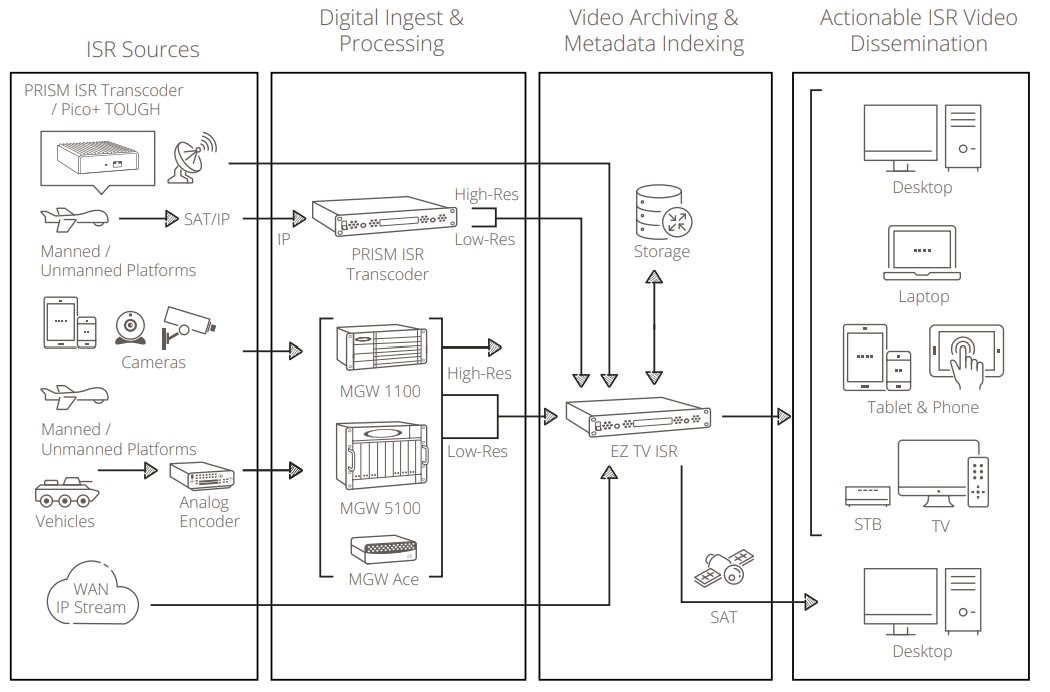
The defense and military market relies on secure, rugged, low‑latency video for intelligence, surveillance, and reconnaissance (ISR), command and control, and tactical situational awareness. Platforms range from manned and unmanned ground vehicles to naval vessels, aircraft, and dismounted soldiers, all of which depend on reliable video links in contested and bandwidth‑constrained environments. Dedicated tactical video streaming systems and tactical data links form the core transport layer for these video workflows, often operating over RF links where bandwidth and reliability are constant constraints.
Projection
The tactical video streaming systems market has been estimated at roughly USD 4.2 billion in the mid‑2020s, with robust growth expected as more ISR and situational‑awareness workflows migrate to IP video and high‑resolution sensors, according to a tactical video streaming systems market report. The defense tactical video data link segment is separately estimated at USD 4.81 billion in 2025 and forecast to reach USD 7.23 billion by 2030, reflecting an 8.49% compound annual growth rate driven by upgrades to digital, high‑bandwidth links and the proliferation of unmanned systems, per Mordor Intelligence’s analysis of defense tactical video data links.
Codec Story
HEVC (H.265) is the dominant codec in many current military encoding platforms, with vendors such as VITEC offering certified, rugged HEVC/H.264 encoders like the MGW Diamond TOUGH and MGW Pico+ TOUGH for naval, airborne, and ground ISR deployments, as described in VITEC’s situational awareness and ISR solution briefs. Soliton Systems and similar vendors also provide ultra‑low‑latency HEVC/H.264 streaming solutions targeted at military and public‑safety use cases, including encrypted, bonded‑link systems for live contribution from vehicles and field units, as outlined in Soliton’s overview of live streaming for military and defense applications.
Legacy systems continue to rely heavily on H.264, particularly where backward compatibility with existing receivers and interoperability across coalition partners are more important than bandwidth efficiency, a pattern reflected in broader advanced video coding market reports that show AVC still holding a substantial share of professional and broadcast infrastructure. By contrast, adoption of AV1 in defense has been limited so far due to long platform certification cycles and the lack of widely fielded, certifiable AV1 encoder/decoder silicon in harsh‑environment systems, even as AV1 gains traction in consumer and cloud‑streaming workflows.
Looking forward, feature‑ and video‑coding‑for‑machines (FCM/VCM) are natural fits for autonomous defense applications—such as drone swarms and unmanned ground vehicles—where video primarily feeds onboard or remote machine inference rather than human operators. The MPEG‑AI family of standards, which includes Video Coding for Machines and Feature Coding for Machines, explicitly targets machine‑centric coding for analytics and autonomous systems, suggesting a future path where defense ISR pipelines increasingly transmit compressed features or machine‑optimized video rather than purely human‑viewed streams.
7. Satellite and LEO Earth Observation
Description
The low Earth orbit (LEO) satellite market spans communications, Earth observation, and scientific payloads, with constellations of small satellites providing persistent coverage for remote sensing, connectivity, and surveillance. Earth observation imagery and analytics—covering applications such as agricultural monitoring, change detection, environmental monitoring, and maritime domain awareness—are a major driver within this broader LEO ecosystem, and video from LEO platforms must be compressed efficiently to fit within constrained RF downlink channels and limited contact times with ground stations.
Market projections
One recent forecast estimates that the global LEO satellite market was valued at approximately USD 7 billion in the mid‑2020s and is projected to grow to USD 15.85 billion by 2035, at an 8.36% compound annual growth rate, driven by communications constellations and Earth observation services.
Codec story
Codec deployment in satellite video pipelines has historically lagged commercial streaming and broadcast markets because of long hardware qualification cycles and the need for radiation‑tolerant, certifiable components. As a result, H.264 and HEVC dominate many current satellite video payloads and ground segments, since they are supported by space‑qualified encoder ASICs and FPGAs and are already integrated into existing modem and gateway equipment, a pattern that mirrors broader video‑encoder market analyses showing AVC/HEVC entrenched in professional contribution workflows.
Fraunhofer’s NESC neural speech codec targets satellite and NTN voice and operates at around 1 kbit/s, with demonstrations over GEO links for direct‑to‑device and in‑vehicle services. Fraunhofer has also previewed NCVC, a neural video codec for video conferencing over narrow‑band LEO links, with a stated operating range of roughly 3–20 kbit/s at 25 fps for smartphone‑to‑satellite video.
As operators move toward more flexible, software‑defined satellite platforms and reconfigurable payloads, there is a clearer path to deploying newer codecs on orbit via software update, potentially enabling AV1 or machine‑centric standards such as VCM and FCM in future constellations where link budgets, onboard processing, and ground infrastructure can support the additional complexity while benefiting from higher compression efficiency or feature‑centric workflows, as explored in emerging MPEG‑AI / VCM documentation.
xml
8. AI / Neural Video Compression
Description
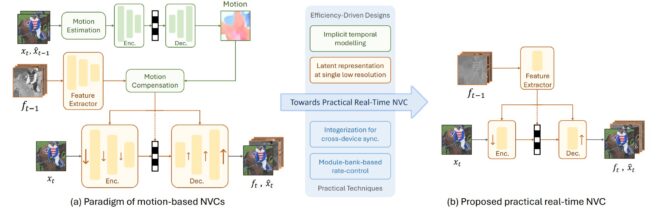
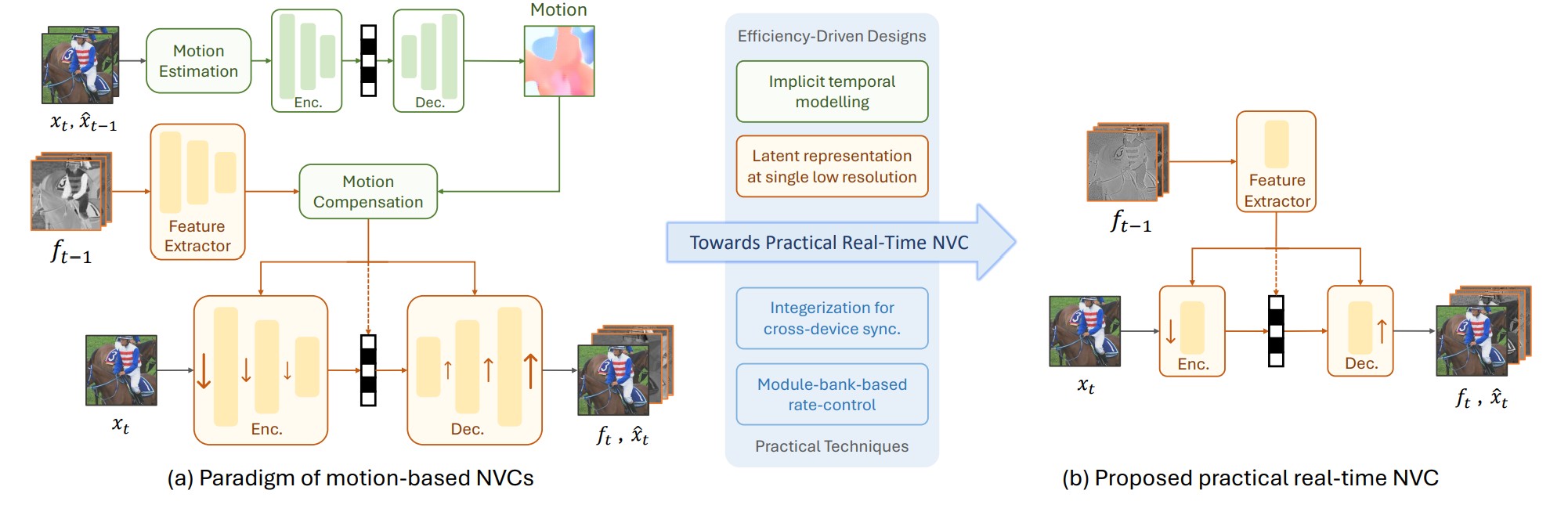
AI‑based neural video compression is the wildcard category in this landscape—potentially disruptive to all traditional codecs, but on a longer timeline and with substantial deployment risk. Neural video codecs (NVCs) replace handcrafted coding tools with trained neural networks, learning end‑to‑end transforms for motion, prediction, and reconstruction rather than relying on block‑based DCTs, hand‑tuned in‑loop filters, and manually designed prediction modes. In contrast to VCM and FCM, which explicitly target machine‑centric analytics and may never produce a human‑viewable pixel stream, most neural codecs to date still aim at human‑viewed video: they try to deliver better subjective quality and lower bitrate than H.26x‑class standards for applications like streaming, conferencing, and interactive video.
Projections
Current state‑of‑the‑art work suggests that neural codecs are moving from pure research toward practical prototypes, but they still remain several years away from broad deployment. One recent NVC, introduced as DCVC‑RT and presented at CVPR 2025, reports real‑time encoding and decoding at roughly 125 and 113 frames per second, respectively, for 1080p video on an NVIDIA A100 GPU while saving about 21% bitrate on average compared to the H.266/VTM reference encoder.
At the more experimental end, generative approaches such as GNVC‑VD, built on video diffusion models, demonstrate perceptually sharp, temporally coherent reconstructions at extreme bitrates below roughly 0.01–0.03 bits per pixel, outperforming both traditional and learned codecs on perceptual metrics in that regime.
Formal standardization efforts are tracking this research but are on a much longer clock than the near‑term VCM/FCM work. The joint MPEG and ITU‑T JVET group has begun preparing the next‑generation “beyond VVC” standard, informally referred to as H.267, with workstreams that include both enhanced traditional coding tools and neural network‑based video coding.
A public roadmap compiled in mid‑2025 indicates that H.267 is projected to be finalized sometime between 2028 and early 2029, with realistic large‑scale deployment not expected until well into the 2030s once silicon, software stacks, and content workflows catch up. In parallel, “bridge” efforts like Nokia’s Video Services over Efficient Infrastructure (VSEI) specification introduce neural‑network post‑filtering as an enhancement layer on top of existing H.26x codecs, providing a first standardized foothold for AI inside deployed compression systems without requiring a wholesale switch to end‑to‑end NVC.
Codec story
A small number of commercial NVC implementations are already being tested in real workflows. Deep Render, for example, has demonstrated an AI‑based video codec that runs inside familiar tools such as FFmpeg and VLC, with independent evaluation at the Streaming Learning Center reporting substantial subjective BD‑rate gains versus SVT‑AV1 at typical streaming bitrates. The combination of toolchain compatibility plus clear quality‑per‑bit advantages is a useful preview of what early commercial neural codecs could look like before full H.267‑class standards and silicon arrive.
Most recently, Apple Machine Learning Research published a paper for CVPR 2026 on STARFlow-V, a normalizing flow-based video generator that achieves approximately 10x higher sampling efficiency than diffusion-based baselines while maintaining strict temporal consistency. By utilizing a “global-local” architecture and a video-aware Jacobi iteration scheme, STARFlow-V addresses the historical “uncanny valley” of AI video—flickering and warping—enabling high-fidelity, strictly causal video synthesis that is suitable for real-time streaming and interactive applications.
Over the longer term, the same neural compression tools are likely to influence both sides of the broader taxonomy laid out earlier in this article. On the “human video” side, H.267‑class neural codecs aim to replace or extend H.26x for streaming, conferencing, and interactive media once standardization and hardware support make them viable at scale.
On the “video for machines” side, many of the same architectures and training pipelines underpin VCM and FCM, but the optimization target is different: instead of human MOS or VMAF, the objective is downstream task performance. In that sense, neural video compression complements VCM/FCM rather than competing with it—VCM and FCM redesign the pipeline around machine inference, while neural codecs offer a path for higher‑efficiency, perceptually optimized video in cloud gaming, immersive media, and future low‑bandwidth interactive services.
Summary Table
| Market | Projections | Dominant codecs |
|---|---|---|
| Video for Machines (VCM/FCM) | Sub-markets include defense tactical video data link at $4.81B (2025) → $7.23B (2030), 8.49% CAGR; industrial edge ~low-$20Bs (mid-2020s) doubling by 2030 at low-to-mid teens CAGR | Standards still maturing (VCM at DIS, FCM following); JPEG XS for in-sensor / ADAS today; HEVC/AV1 in current AV pipelines |
| Spatial / Immersive / Volumetric | No standalone figure cited; consumer headset segment in correction (Vision Pro paused, Quest shipments down) | MV-HEVC (Apple and Meta spatial video); V-PCC and G-PCC for point clouds; radiance-field coding in early JPEG/MPEG discussion |
| Enterprise XR / Industrial Metaverse | $34.44B (2024) → $181.04B (2030), ~32% CAGR (ResearchAndMarkets); $24.51B (2024) → $395.15B (2034), ~32% CAGR (Precedence) | H.264, HEVC, AV1 for 2D viewports; V-PCC and G-PCC for volumetric; proprietary AVV (Arcturus) |
| Remote Healthcare / Telesurgery | $141.19B (2024) → $380.33B (2030), 17.55% CAGR | H.264 dominant; HEVC growing; VVC promising on raw imagery; JPEG XS emerging for sub-frame-latency surgical feeds |
| Cloud Gaming | $2.27B (2024) → $21.04B (2030), 44.3% CAGR (Grand View); $3.30B (2024) → $120.60B (2035), 43.31% CAGR (Precedence); $7.7B (2025) → $19.7B (2032), 14.4% CAGR (Stratview) | H.264 dominant for device compatibility; AV1 emerging on supported clients (GeForce NOW, Boosteroid); HEVC where hardware allows |
| Defense and Military ISR | Tactical video streaming systems ~$4.2B (mid-2020s); defense tactical video data link $4.81B (2025) → $7.23B (2030), 8.49% CAGR | HEVC dominant in new systems (VITEC, Soliton); H.264 in legacy and coalition interop; AV1 adoption limited; VCM/FCM as future direction for autonomous platforms |
| Satellite / LEO Earth Observation | ~$7B (mid-2020s) → $15.85B (2035), 8.36% CAGR | H.264 and HEVC dominant due to space-qualified silicon; Fraunhofer NESC and NCVC neural codecs emerging for narrow-band links; AV1 / VCM / FCM as future on software-defined payloads |
| AI / Neural Video Compression | No market projection cited; H.267 finalization projected 2028–2029, large-scale deployment well into the 2030s | Research and early commercial: DCVC-RT, GNVC-VD, Deep Render; Nokia VSEI as standardized neural post-filter bridge on top of H.26x; H.267 long-term |